General MBTA Topics (Multi Modal, Budget, MassDOT)

They were in the tunnel several times doing track work!!
How in the world did this 60-y-o problem slip pass them & remain hidden without showing its face for all these years?!!!! :eek:
 
The study conducted by the Pioneer Institute, a Boston think tank, concluded that the MBTA’s costs are problematic during this “particularly tumultuous time in the Authority’s history.”

The transit authority’s operating costs have risen the fastest since 2021, the year the MBTA eliminated the Fiscal and Management Control Board, the report found. Costs rose nearly 15% between the fiscal years of 2023 and 2024.
The Pioneer Institute is garbage.
 
Gee...think those cost increases might be because of the state-of-repair blitz that followed years of disinvestment at the hands of some of Pioneer's highest falling-upwards failsons?

I'm surprised there wasn't a privatization barb thrown in there for old time's sake.

EDIT: But I see Charlie "The Lesser" Chieppo did get in a good "but the pensions!..." zinger for the Herald comment section masses.
 
Last edited:
It's always funny to me that the Pioneer Institute is harsher than harsh on the 2.45% rate for T employees but is fairly quiet on the MSP or municipal police getting 2.5% at 50 or 55.
 

The Pioneer Institute is garbage.
The Pioneer Institute is absolutely arguing in bad faith, but there are legitimate points made. And while too much focus on cost control will lead to neglecting service quality, too little means that far less service is provided than could be with those funds. In particular, the increases in bus operating costs (64% revenue miles) from 2019 to 2023 are nothing to sneeze at. It's hard to say exactly what caused that, and the NTD numbers for 2024 should be interesting. However, Pioneer shows their hand by providing data on revenue hours (increase of 94% over the same time period), which is almost certainly a worse metric.

It's always funny to me that the Pioneer Institute is harsher than harsh on the 2.45% rate for T employees but is fairly quiet on the MSP or municipal police getting 2.5% at 50 or 55.
While this is clearly hypocritical, it is fair to ask why MSP and the T need their own pensions instead of just integrating into the state's. Larger pension funds are, in general, able to achieve higher rates of return all else being equal. There is also the benefit of pension costs not being a drag on any specific agency and it being much harder to not fully fund those pensions. Ultimately, the pensions are almost certainly a result of the T and police having better unions than most state employees, which while good for them, is a pretty terrible reason for their pensions to be that much more generous.

 
Gee...think those cost increases might be because of the state-of-repair blitz that followed years of disinvestment at the hands of some of Pioneer's highest falling-upwards failsons?

I'm surprised there wasn't a privatization barb thrown in there for old time's sake.

EDIT: But I see Charlie "The Lesser" Chieppo did get in a good "but the pensions!..." zinger for the Herald comment section masses.
What really pisses me off is that they keep on doing track work. Nothing wrong with that. They claim once & for all. But they just keep on going back time & time again, doing the same spots over & over again, messing up streets, detour traffic, wasting up & monopolizing precious time & making traffic a living nightmare!!!! Or they are doing the work, then are finding out that old cable lines that were in use hundreds of years ago are suddenly coming lose and are knocking out power to trains!! :mad: :eek:
 
I wonder if the bus operatnig cost issue hast o do with bus operator pay. Labor has gotten a lot more expensive on the lower end since 2019, and probably they raised wages to be able to hire all those new drivers.
 
The Pioneer Institute is absolutely arguing in bad faith, but there are legitimate points made. And while too much focus on cost control will lead to neglecting service quality, too little means that far less service is provided than could be with those funds. In particular, the increases in bus operating costs (64% revenue miles) from 2019 to 2023 are nothing to sneeze at. It's hard to say exactly what caused that, and the NTD numbers for 2024 should be interesting. However, Pioneer shows their hand by providing data on revenue hours (increase of 94% over the same time period), which is almost certainly a worse metric.


While this is clearly hypocritical, it is fair to ask why MSP and the T need their own pensions instead of just integrating into the state's. Larger pension funds are, in general, able to achieve higher rates of return all else being equal. There is also the benefit of pension costs not being a drag on any specific agency and it being much harder to not fully fund those pensions. Ultimately, the pensions are almost certainly a result of the T and police having better unions than most state employees, which while good for them, is a pretty terrible reason for their pensions to be that much more generous.
MSP definitely participates in MSERS (MA State Employees Retirement System), even if their rate is different from other classifications of state employees. That's fairly common though. The MBTA retirement system is independent courtesy of the legislation that created it - its largely because, unlike most state employees including MSP where the rate is generally set by statute & legislation, the MBTA's retirement plan contributions and benefits are set purely by the collective bargaining agreements between it and its unions.

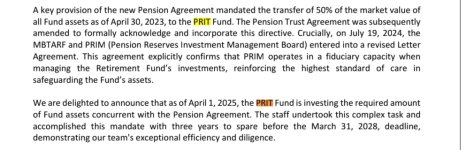
That said, while individual systems manage benefits, the money gets invested the same way - MSERS, MTRS (Teachers), Boston Teachers, and most of the other municipal and public retirement systems all participate in the Pension Reserves Investment Trust (PRIT) Fund, run by PRIM, which is the MA equivalent of CALPERS - its a pooled fund that controls $110B in retiree money. I realise thats a bit of an acronym dump.

That said... Pioneer isn't wrong that the MBTA pension was/is historically mismanaged - it was fully covering its liabilities in 2000, 96% funded in 2006 and was down to 52.6% in 2024. Part of that is the benefit administration - by its own numbers it pays out significantly more than it takes in, and that shortfall is largely paid for out of the operating budget. The 162M the T had to kick in in 2024 would have a very long way in other parts of the system, let alone cumulatively.

But the other part of that is that the MBTA just significantly underperforms the state. In 2022 it managed to lose 13% of its value, some $300m. On a 10 year basis it underperformed by 80bp, 110bp in 2024 alone. Thankfully, the law was changed in 2017 to allow the MBTA to participate in PRIT, and as of April 2025, 50% of the MBTA RF is also administered as part of the statewide system, but yea. I don't disagree in this instance that its very fragile looking.

Screenshot_20250722_093247_Chrome.jpg
Screenshot_20250722_092947_Chrome.jpg
 

Attachments

  • 1000040907.jpg
    1000040907.jpg
    152.4 KB · Views: 77
Last edited:
I wonder if the bus operatnig cost issue hast o do with bus operator pay. Labor has gotten a lot more expensive on the lower end since 2019, and probably they raised wages to be able to hire all those new drivers.
Given they just had a severe driver shortage (are we even out of that?) and were throwing out bonuses and increased pay to attract anyone to be a driver, I'd wager that is part of it. That said: it's just supply and demand and capitalism, you got to pay a wage that people will do the job for, no one is altruistically taking below market wages to be an MBTA bus driver.
 
the pensions are almost certainly a result of the T and police having better unions than most state employees,
The T and the MSP having better benefits is partially the power of labor unions - but - I also think this is also an acknowledgement that the frontlines of their work are likely to be more injurious and as a result may require more financial resources to enjoy what years they may have in retirement. On the other hand, I do think that administrative and managerial workers in both organizations should be on different schedules in the state pension system.
 
The newspapers were like that. It was skilled and you got paid more because you could get severely injured doing it.
 
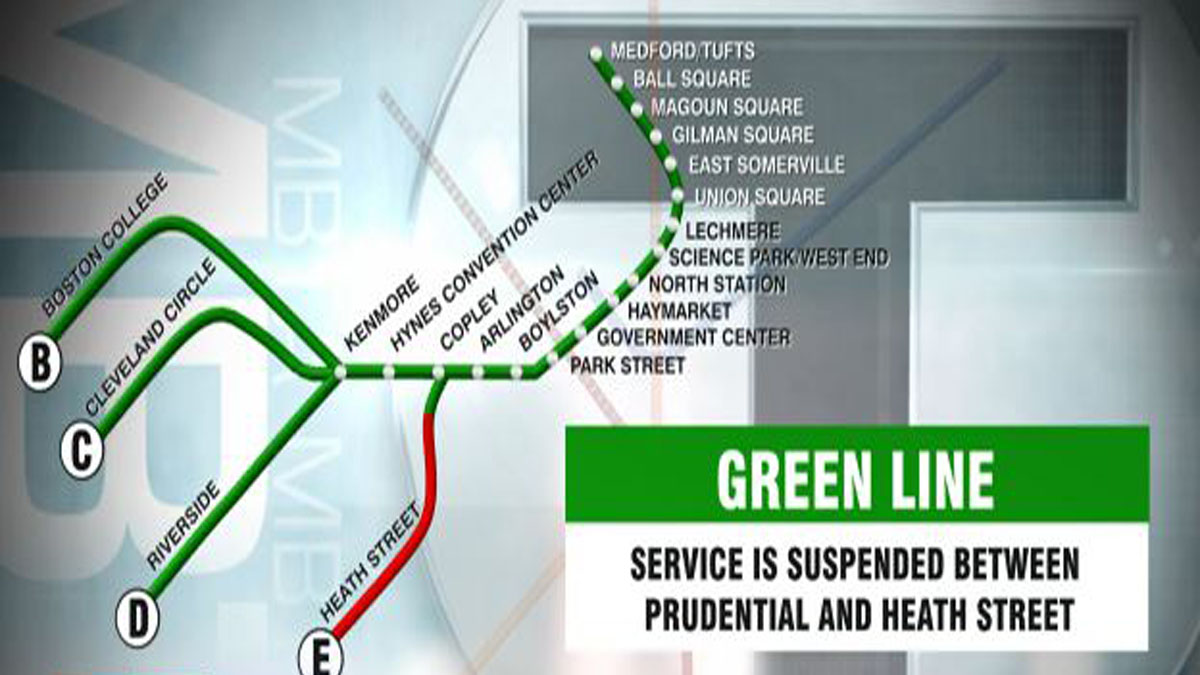
A Green Line train became disabled near Back of the Hill around 4:45 p.m., ultimately due to a owned overhead catenary wire, which powers Green Line trains, according to the MBTA.

The root cause is under investigation, though staffers are working to determine whether a large vehicle brought down the wire. There were no reported injuries.

Crews are now working to repair the wire.
 
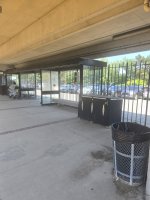
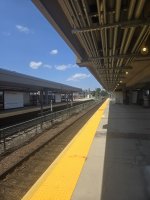
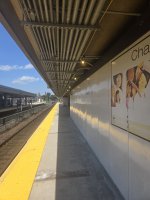
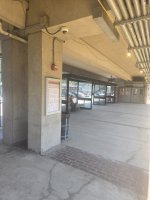
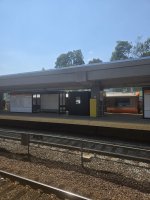
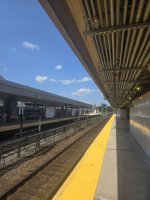
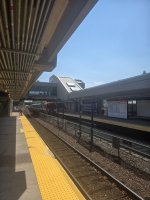
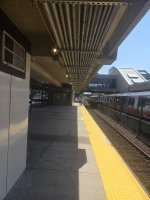
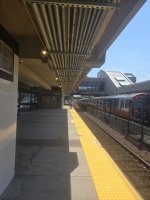
Took some photos at Oak Grove today, and boy, it's really outdated, especially at the commuter rail platform.

Not much for a rider experience, at all.

I also think the general area is quiet underdeveloped, probably partly because of NIMBYism nearby
 

Attachments

  • 20250730_140659.jpg
    20250730_140659.jpg
    1.7 MB · Views: 123
  • 20250730_140654.jpg
    20250730_140654.jpg
    1.5 MB · Views: 117
  • 20250730_140646.jpg
    20250730_140646.jpg
    1.4 MB · Views: 124
  • 20250730_140643.jpg
    20250730_140643.jpg
    1.9 MB · Views: 129
  • 20250730_140640.jpg
    20250730_140640.jpg
    1.9 MB · Views: 112
  • 20250730_140638.jpg
    20250730_140638.jpg
    1.6 MB · Views: 115
  • 20250730_140635.jpg
    20250730_140635.jpg
    1.7 MB · Views: 126
  • 20250730_140631.jpg
    20250730_140631.jpg
    1.7 MB · Views: 119
  • 20250730_140633.jpg
    20250730_140633.jpg
    1.6 MB · Views: 117
Took some photos at Oak Grove today, and boy, it's really outdated, especially at the commuter rail platform.

Not much for a rider experience, at all.

I also think the general area is quiet underdeveloped, probably partly because of NIMBYism nearby
The Haymarket North extension has (in my opinion) the worst stations on the entire system, only the Braintree branch but its close. Seriously, look at the pre 1975 Sullivan Square station to understand just how much of a downgrade it was.
 
Took some photos at Oak Grove today, and boy, it's really outdated, especially at the commuter rail platform.

Not much for a rider experience, at all.

The CR platform was basically out of service for years, and I don't think they did much to fix it up when they put it back in service for one of the big recent-ish OL shutdowns. I don't think they intended to keep it open after the OL was back, but people wanted it so they kept it. For years the Haverhill line only stopped there when there were serious issues or shutdowns.

I also think the general area is quiet underdeveloped, probably partly because of NIMBYism nearby

If you think it's bad now, two of the three big nearby-ish residential developments on the Washington Street (west) side weren't even complete ten years ago, and the third one wasn't even done five years ago. The development there has improved from a very low baseline in the not-too-distant past. (But some of that is in Melrose, where the NIMBYs tend to treat anything with more than two stories as possibly heralding the apocalypse.)
 

Back
Top