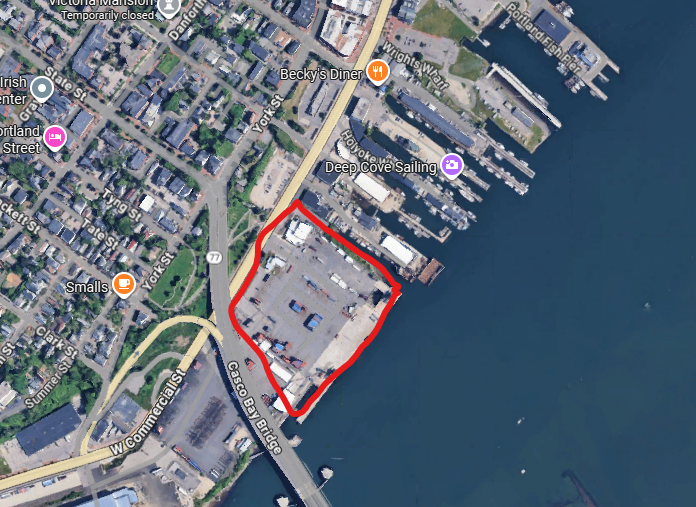
I appreciate the vision, and in a perfect world with unlimited budgets, a downtown or near downtown stadium would be incredible. But when I look at actual development projects, I prefer to stay grounded in the financial and logistical realities of the current market.
Here is why that idealism doesn't apply to a USL League One team in 2026:
(1) Unless a billionaire inexplicably decides to make Portland their passion project (and we are not getting a "sugar daddy like Bob Kraft"), Hearts of Pine does not have the capital for a massive urban infill project.
- People forget that most dirt dug up in Portland can't just be put back; it has to be trucked out of state to specialized facilities at enormous cost (millions of dollars).
- The Mall parking lot is flat, paved, and comparatively cheap. It kills the project to spend the entire budget on land acquisition and remediation before you've even poured a footing.
(2) To be financially viable, a modern stadium cannot just host 15-20 soccer games a year. It needs concert revenue.
- Fitzpatrick or Near Downtown: You have a literal zero percent chance of getting permits for regular concerts here. Look at the Back Cove Festival - a huge success with minimal impact, yet NIMBYs are already mobilizing to kill it next year. Opposition would be immediate and legally paralyzing.
- The Downs: Scarborough residents are already in a fury over The Downs. They aren't approving a concert venue.
- The Mall: You can host a loud concert on a Tuesday night, and no one will complain because the neighbors are parking lots and commercial buildings. That revenue stream is essential for survival.
(3) We need to be honest about who lives where. The cost of living is pushing the working class outward. To fill 5,000+ seats, we need the fans from Standish, Buxton, Gorham, Windham, Westbrook and beyond.
- A family coming from Hollis is not taking a bus or riding a bike to the game. They aren't carpooling.
- I hear this constantly from hockey parents in the western suburbs. They skip Mariners games even when they have tickets available for a discount because they hate driving downtown and dealing with parking (even though parking exists). If you make the logistics a hassle, you alienate the suburban base you desperately need.
(4) You mentioned the mall needs mixed-use to survive. I agree. That is exactly why the stadium belongs there. The stadium is the anchor tenant that makes building housing and bars in that sea of asphalt viable.
- The Mall is owned by Brookfield, a developer that specializes in turning retail centers into mixed-use districts (look at their projects in Atlanta or Honolulu). They have the capital and the playbook to execute this.
- You build the stadium to fix the neighborhood. That way, the venue is established first. The residents who eventually move into the new housing know what they are getting into, which cuts the NIMBY arguments off at the knees.
The reality is that we can't ignore reality. You have to confront the economics and the political environment. You can't just bully a development into existence without consequence, and you certainly can't build one on "vibes" alone.