Roads and Highways General Development Thread

Why does MassDOT seem hellbent on designing expressways? The Morrissey Blvd designs, and now these designs for this project are straight out of a 1970s car-centric mindset. Sure, they throw in paths alongside the multi-lane highways, but only as lipstick-on-a-pig. When is MassDOT going to stop totally basing their proposed designs on traffic counts and traffic capacity models, and instead start putting parkland, pedestrians, busses and bicycles first?
 
Anecdotally, it seems a much higher percentage of them live in the suburbs and drive to work compared to their equivalents at the MBTA or the city transportation departments. And not just the greybeards either - I once attended a meetup for young(ish) transportation professionals, and met a number of MassDOT staff who drove to work from places like Melrose and Belmont.
 
I once attended a meetup for young(ish) transportation professionals, and met a number of MassDOT staff who drove to work from places like Melrose and Belmont.

Guess those two live at their parents home.
 
Should this overpass project get it's own thread?
It could, but the problem with these MassDOT highway projects is that they never seem to happen. A lot of hoopla up front, but then they bounce back and forth in the bureaucratic echo chamber for years, and then ....nothing.
 
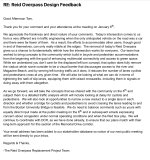
Just got a long email from the project team, reads a lot like the one I got from the I-90 project team except this one I think I managed to elicit more of an emotional reaction beyond "we need the space". What did it? Well, I said that they "didn't try very hard" and were "wreaking havoc" and "playing Sim City" and accused them of working backwards from a solution. My fault for that one. However, these emails, while they have no effect on the outcome of the design, are actually read by a human, so definitely send them if you want to shout into the void.

1769108027314.png
 
Just got a long email from the project team, reads a lot like the one I got from the I-90 project team except this one I think I managed to elicit more of an emotional reaction beyond "we need the space". What did it? Well, I said that they "didn't try very hard" and were "wreaking havoc" and "playing Sim City" and accused them of working backwards from a solution. My fault for that one. However, these emails, while they have no effect on the outcome of the design, are actually read by a human, so definitely send them if you want to shout into the void.

View attachment 70213
The "Reid Overpass Replacement Team"?
Showing their bias in their title.
 
Just got a long email from the project team, reads a lot like the one I got from the I-90 project team except this one I think I managed to elicit more of an emotional reaction beyond "we need the space". What did it? Well, I said that they "didn't try very hard" and were "wreaking havoc" and "playing Sim City" and accused them of working backwards from a solution. My fault for that one. However, these emails, while they have no effect on the outcome of the design, are actually read by a human, so definitely send them if you want to shout into the void.

View attachment 70213
Hmm sounds familiar to the email I got today
 

Attachments

  • IMG_0029.jpeg
    IMG_0029.jpeg
    986.5 KB · Views: 49
The "Reid Overpass Replacement Team"?
Showing their bias in their title.
Idk, replacement does not have to mean a replacement of existing conditions. If they remove the overpass and fulfill all our wildest dreams they're still replacing it with something. I don't think we need to read that much into it.
Just got a long email from the project team, reads a lot like the one I got from the I-90 project team except this one I think I managed to elicit more of an emotional reaction beyond "we need the space". What did it? Well, I said that they "didn't try very hard" and were "wreaking havoc" and "playing Sim City" and accused them of working backwards from a solution. My fault for that one. However, these emails, while they have no effect on the outcome of the design, are actually read by a human, so definitely send them if you want to shout into the void.

The irony of your "playing Sim City" comment is I believe that most of the people professionally involved agree with you and if they could play Sim City with no repercussions would be aligned with a design that fronts vulnerable road users over people driving. There is a deep institutional fear (not wrongly so) among professionals of not wanting to be seen as driving a vision over the perceived community desire. The flip side of this is that there's an incredible reluctance to take a stand and actually defend industry best practices.
 
Just got a long email from the project team, reads a lot like the one I got from the I-90 project team except this one I think I managed to elicit more of an emotional reaction beyond "we need the space". What did it? Well, I said that they "didn't try very hard" and were "wreaking havoc" and "playing Sim City" and accused them of working backwards from a solution. My fault for that one. However, these emails, while they have no effect on the outcome of the design, are actually read by a human, so definitely send them if you want to shout into the void.
hmm, the entire concept of "we can't reduce road capacity since congestion is already bad" that they are seemingly married to shows some misunderstanding of induced demand. The entire point of the reconstruction is to build less roads to reduce car travel. Sure, it will be painful in the very short term but people will quickly adapt to take alternative routes or alternative modes.
 
hmm, the entire concept of "we can't reduce road capacity since congestion is already bad" that they are seemingly married to shows some misunderstanding of induced demand. The entire point of the reconstruction is to build less roads to reduce car travel. Sure, it will be painful in the very short term but people will quickly adapt to take alternative routes or alternative modes.
But the concept of reducing capacity to nudge drivers to other routes or other modes assumes that those other routes or modes are actually viable.

Someone looking into their crystal ball about the future demand potential for Mem Drive is going to get a pretty murky picture of alternate routes and modes (travel into the Urban Core from the west).

1) No progress on the Allston rebuild of the Pike or Storrow. At the current rate of progress the viaduct is going to collapse before it gets rebuilt.
2) No progress on viable Regional Rail. T is currently chasing the fantasy of BEMU tech rather than just deploying proven catenary.

So if you are a conservative transportation planner, how much of a bet do you make on alternate routes or modes? Do you want to be the planner who made the wrong bet?
 
But the concept of reducing capacity to nudge drivers to other routes or other modes assumes that those other routes or modes are actually viable.

Someone looking into their crystal ball about the future demand potential for Mem Drive is going to get a pretty murky picture of alternate routes and modes (travel into the Urban Core from the west).

1) No progress on the Allston rebuild of the Pike or Storrow. At the current rate of progress the viaduct is going to collapse before it gets rebuilt.
2) No progress on viable Regional Rail. T is currently chasing the fantasy of BEMU tech rather than just deploying proven catenary.

So if you are a conservative transportation planner, how much of a bet do you make on alternate routes or modes? Do you want to be the planner who made the wrong bet?
I feel like we're stuck in this chicken or the egg problem where we don't invest in building-out the alternate routes/modes because there's already viable car travel that works kind of fine for most people, and we won't reduce investment in the automotive side of the transportation network because there's no alternate routes/modes built out.
 
I feel like we're stuck in this chicken or the egg problem where we don't invest in building-out the alternate routes/modes because there's already viable car travel that works kind of fine for most people, and we won't reduce investment in the automotive side of the transportation network because there's no alternate routes/modes built out.
The arguments for and against removal of this overpass are similar to the discussion that happened on here about removal of the Bowker overpass. Both cases seem to boil down to whether removal of the overpasses would create unacceptable traffic congestion. I always like to step back and think: what if these overpasses had never been built in the first place? Would they even be missed?
No.
Motorists would have operated in, and adjusted, to whatever traffic ecosystem was available. For example, there are no overpasses at the River Street and Western Ave crossings of Memorial Drive, which are certainly major intersections, yet they work okay. The junction of Routes 2 and 16 at Alewife is similar.
 
But the concept of reducing capacity to nudge drivers to other routes or other modes assumes that those other routes or modes are actually viable.

Someone looking into their crystal ball about the future demand potential for Mem Drive is going to get a pretty murky picture of alternate routes and modes (travel into the Urban Core from the west).

1) No progress on the Allston rebuild of the Pike or Storrow. At the current rate of progress the viaduct is going to collapse before it gets rebuilt.
2) No progress on viable Regional Rail. T is currently chasing the fantasy of BEMU tech rather than just deploying proven catenary.

So if you are a conservative transportation planner, how much of a bet do you make on alternate routes or modes? Do you want to be the planner who made the wrong bet?
I think those are fair points, but improved bike connectivity is one area that would be improved by the redesign, is cheap to build (and is legitimately improving at a good pace in Cambridge and Back Bay). For some suburban commuters they may have no choice but to drive, but I'm guessing enough people crossing the roundabout right now are Cambridge/Fenway residents or BU students in their own car or in a uber. And enough of them can (and will) mode switch to prevent the trafficpocalypse that planners are so afraid of.

And remember, traffic in that circle is already sh*t. It's just gonna go from being clogged to still being clogged no matter what solution we pick.
 
The arguments for and against removal of this overpass are similar to the discussion that happened on here about removal of the Bowker overpass. Both cases seem to boil down to whether removal of the overpasses would create unacceptable traffic congestion. I always like to step back and think: what if these overpasses had never been built in the first place? Would they even be missed?
No.
Motorists would have operated in, and adjusted, to whatever traffic ecosystem was available. For example, there are no overpasses at the River Street and Western Ave crossings of Memorial Drive, which are certainly major intersections, yet they work okay. The junction of Routes 2 and 16 at Alewife is similar.
I like to posit the opposite question: What makes you think the absence of an over/underpass is preferable to having one?

Generally speaking an overpass is taking some significant percentage of the traffic volume and putting it somewhere where someone who is a pedestrian or cyclist doesn't have to deal with it at all, and is making the intersection they do have to interact with less complicated and have fewer lanes/movements. To me, that often outweighs the downside of their lack of beauty in terms of impacts on me when I am a pedestrian/cyclist.

If this state could somehow be less negligent with maintenance and actually keep them clean/painted, well-lit, and not dropping chunks of concrete and paint chips, I'd feel even more strongly that way.

-----------

River + Western are one-way and don't need as many light phases, which helps them be a little bit less of a bottleneck than it looks like they should be at first glance. The light at the Anderson Bridge/JFK St is the only plain 4-way signalled intersection on Mem Dr I think.

The Alewife mess is basically saved by the surrounding segments of the Alewife Brook Pkwy being so broken that it manages to look "good" in comparison. It also has almost no interaction/conflicts with non-motorized users to worry about.

--------

Now, with all of that said: I'll also agree with the critique of their overpass concept.

I see absolutely no reason why you need an overpass that's 2 lanes in each direction. A roadway that only has two lanes at traffic light controlled intersections cannot move 2 full lanes worth of free-flowing traffic in each direction. Especially with left-turn movements existing at some of them.

So I'm entirely in agreement with previous mentions suggesting to rebuild the overpass but with only one lane each direction.

Should cause about zero change of actual vehicle throughput, moderate traffic calming on both the overpass + the roundabout (from being able to achieve more optimal entry/exit angles that force slower speeds), will let you reclaim as much as 20ft+ of cross-section in some spots, and will completely eliminate on-ramp merging (and the challenges people have with it + managing their attention).

The two combined will let you greatly improve safety + user-experience for non-motorized users, significantly more so than DCR's emergency fixes on the south side have.

 
I like to posit the opposite question: What makes you think the absence of an over/underpass is preferable to having one?

In the case of an expressway or freeway, underpasses and overpasses are usually justifiable because they fit the facility's primary function of moving large volumes of passenger and freight traffic. However, for metro Boston's historic system of parkways, that is not the case. The metropolitan parkway system established in Boston and surrounding areas in the late 1800s was intended to be multi-use, with recreation as its primary function.

Given this, there are several major issues with having vehicular overpasses and underpasses (for cars) on the parkway system, including the following: they give the perception to motorists that the road is a highway, thus encouraging much higher speeds and endangering pedestrians and bicyclists; they eat up valuable park land; they visually degrade the experience of the area as a park; they leave less space in the parkway corridor for multi-use paths and other active transportation facilities; and, they create induced demand, drawing commuters away from transit and active transportation options. In short, they basically make what should be a parkway into an expressway.

Storrow Drive is a prime example. A few decades ago, former Governor Dukakis championed the "boulevardization" of Storrow Drive, by eliminating its vehicular underpasses and replacing them with signalized intersections, which would have narrowed the roadway footprint and freed up additional park space, and reduced roadway speeds, making the environment more park like. Of course that didn't happen.

It would be a shame to miss this opportunity to make Memorial Drive more like a parkway than an expressway at this Reid Overpass location. The traffic models and calcs will of course point to an overpass being the superior solution, but cars should not be king on a multi-use parkway facility such as this.
 
In the case of an expressway or freeway, underpasses and overpasses are usually justifiable because they fit the facility's primary function of moving large volumes of passenger and freight traffic. However, for metro Boston's historic system of parkways, that is not the case. The metropolitan parkway system established in Boston and surrounding areas in the late 1800s was intended to be multi-use, with recreation as its primary function.

Given this, there are several major issues with having vehicular overpasses and underpasses (for cars) on the parkway system, including the following: they give the perception to motorists that the road is a highway, thus encouraging much higher speeds and endangering pedestrians and bicyclists; they eat up valuable park land; they visually degrade the experience of the area as a park; they leave less space in the parkway corridor for multi-use paths and other active transportation facilities; and, they create induced demand, drawing commuters away from transit and active transportation options. In short, they basically make what should be a parkway into an expressway.

Storrow Drive is a prime example. A few decades ago, former Governor Dukakis championed the "boulevardization" of Storrow Drive, by eliminating its vehicular underpasses and replacing them with signalized intersections, which would have narrowed the roadway footprint and freed up additional park space, and reduced roadway speeds, making the environment more park like. Of course that didn't happen.

It would be a shame to miss this opportunity to make Memorial Drive more like a parkway than an expressway at this Reid Overpass location. The traffic models and calcs will of course point to an overpass being the superior solution, but cars should not be king on a multi-use parkway facility such as this.
As a society, we have largely lost the narrative on the historical parkway system. Car commuters rule. But this is still worthwhile to remind people.
 
The traffic models and calcs will of course point to an overpass being the superior solution, but cars should not be king on a multi-use parkway facility such as this.
It should also be pointed out that the traffic models are not infallible prophecies recieved from down on high and have pretty regularly overestimated vehicle volumes, while the confidence in the active transportation numbers should be near 0.
 

Back
Top