MBTA Buses & Infrastructure


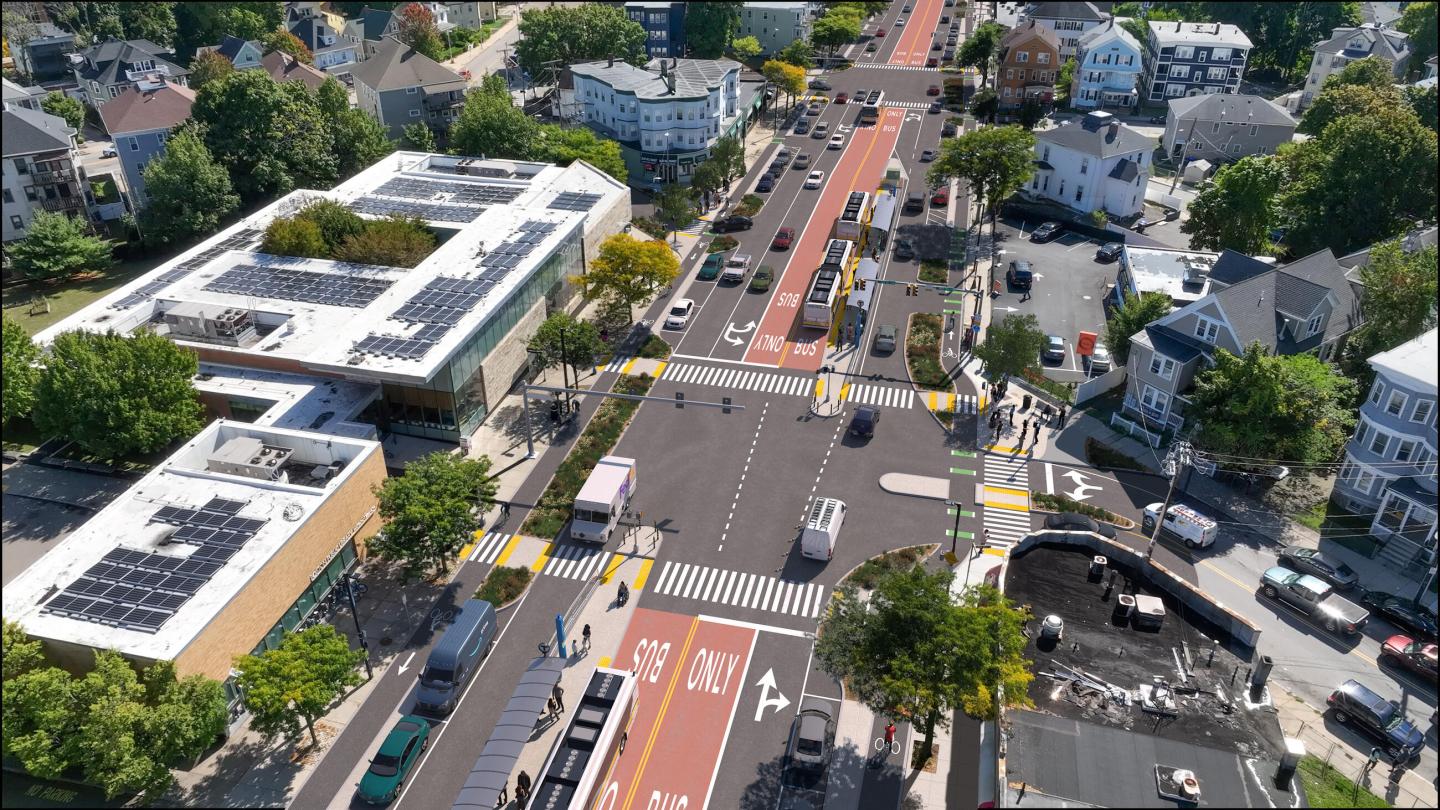
Side running busway
Why not a center-running busway? The Sullivan Sq underpass does pop up in the center of the street just south of the Alford St bridge, but that should not preclude a center-running busway. In any case, at least the project schedule looks fairly aggressive, and the project will provide bus lanes for the SL-3 to be extended to Sullivan Sq., and also provide improved bus service for a future Revs stadium.
 
Why not a center-running busway? The Sullivan Sq underpass does pop up in the center of the street just south of the Alford St bridge, but that should not preclude a center-running busway. In any case, at least the project schedule looks fairly aggressive, and the project will provide bus lanes for the SL-3 to be extended to Sullivan Sq., and also provide improved bus service for a future Revs stadium.
I would expect that it's because the station is on the west/north side of the underpass so it might tie in better on that side of the street? I don't see how the work the northern end of things tho.
 
1000039000.jpg

Keeping in mind the underpass is going away, it looks like the draft plan (as of April 2025) was to have a separated transitway on the western side of the alignment once off the bridge, with the bus lanes transitioning to the bridge north of Arlington Ave - based on how the bus lanes are laid out in this draft, it would appear to be more compatible with side running lanes than not.

Also, apropos of everything else, I just happened across the following: Apparently the City of Boston will be doing the first public presentation on its plans for Rutherford Ave/ Sullivan Sq in 3 years - this appears nowhere on the city website, and doesn't appear to have a webcast available, so hopefully someone will be able to attend and post slides.
 
I would expect that it's because the station is on the west/north side of the underpass so it might tie in better on that side of the street? I don't see how the work the northern end of things tho.
If you check the Locally Preferred Alternative part of the SLX study, it seems like they landed on the side-running busway configuration as a part of that process. Probably side compared to center for a few factors (fewer intersections to deal with on the Casino side of the corridor, better for an uninterrupted busway facility - I’m sure it’s better for the bridge crossing too if the Sullivan Square underpass is gonna be removed).
 
If you check the Locally Preferred Alternative part of the SLX study, it seems like they landed on the side-running busway configuration as a part of that process. Probably side compared to center for a few factors (fewer intersections to deal with on the Casino side of the corridor, better for an uninterrupted busway facility - I’m sure it’s better for the bridge crossing too if the Sullivan Square underpass is gonna be removed).
Didn't see that they had specified the busway like that. I breezed through reviewing that document again - but - did they specify why? I don't see much of any discussion on benefits or drawbacks of the northern side being that, at least in the T's words.
 

Bus lanes and having buses run frequently and on-time in bus lanes is totes racist, says car-brained Council dunderheads.

(Yes, Ed Flynn is prominently involved.)

🤦‍♂️

While I agree that the "racism" argument is ridiculous, I also find it somewhat difficult to believe that these neighborhoods are really consistently electing politicians that hold views wildly out of step with their electorate.

--------

It seems worth pointing out that Dorchester + Mattapan both have a higher % of households with a car than the average for the city, and an outright majority of the working population in both gets to work by driving (which also makes them both far above the city average for driving to work - in fact out of the 23 neighborhoods the data is split into - they're #3 + #4 for the highest % of car commuters in the city, behind only W. Rox + Hyde Park).

In Dorchester car commuters outnumber transit commuters 1.9:1. In Mattapan it's 2.39:1.

Even Roxbury has car commuters outnumbering transit commuters (1.36:1) and a higher than average % of workers that drive to work.

Citation w/2025 numbers: https://www.bostonplans.org/getattachment/45b1d52a-e762-42a4-b81d-d52072bfda61

--------

I do not spend enough time in those neighborhoods to claim to know the views of the populations in them on a personal level.

However, I also think the assumptions of many seem to be that these people ought to support transit because they're minorities or lower-income, is why these proposals seem to keep running into much more opposition than "expected".

Reality is that in terms of how people in these areas get around today, some of these neighborhoods more closely resemble West Roxbury than they do East Boston.

I would not necessarily consider it obvious that these neighborhoods would support these lanes if it was hypothetically put to a vote.

-------

Note: This isn't me saying they're a bad idea, at all.

 
Reality is that in terms of how people in these areas get around today, some of these neighborhoods more closely resemble West Roxbury than they do East Boston.
Dorchester, Mattapan, and Roxbury are more reliant on personal vehicles than many other parts of the city. But that's not because of inherent characteristics of the population or the infrastructure that make it more car reliant, suburban, or "quiet" like West Roxbury is. It is car reliant because there have been generations of public transportation disinvestment and destruction from urban renewal leaving the neighborhood with a multitude of bus lines that are usually packed but insufficient and unreliable. In the absence of appealing alternatives, people with the means have relied on cars to get around and anything that changes that dynamic for them, they have a bad reaction to. It's status quo bias and the hill of hysteria. It's not a reason to continue shortchanging these neighborhoods by making them even more car-reliant with worse traffic, worse health outcomes, and worse access.

Unlike most of West Roxbury, the characteristics of these neighborhoods are VERY walkable (dense organic street grids, mixed-use multifamily housing, polycentric) and BHA is a perfect candidate for upgraded transit service (very wide and long corridor, previous streetcar line, many important locations and connections, already has many frequent buses running down it). The status quo of car reliance is not good for anyone, there is no reason why the city should continue to hold these residents back from good alternative options to private vehicles. The Blue Hill Ave bus lane is not a car-centric, racist, and elitist project of urban renewal, it's a major public transportation investment that will primarily improve the lives of people in Mattapan, Dorchester, and Roxbury.
 
Last edited:
This issue is the City of Boston governments own doing!

While I wholeheartedly disagree with the vague notion that the Bus Lane project is racist, I don't disagree with the arguement that city's implementation strategy could be considered a civil rights violation. The arguement could be made that the city implemented and then when it caused more uproar, they ripped it out. So essentially the city could be taking the exact same path along Blue Hill Ave, but this time it is a much more involved and expensive project that when/if it is ripped out would set back transit investment for the corridor another generation.

We railed on this board against the city ripping out the Boylston Street bus lane because it was pandering to the wealthy (let's be honest mostly white) community of Back Bay. With the advancement of the camera enforcement (I can't recall where that is in the process) for bus lanes, the Boylston Street bus lane should be reimplemented alongside any improvement for Blue Hill Ave. Most people on this board can agree that transit investment - while painful at first - pays off, as folks adjust and change their habits.

I think the biggest failure of the Blue Hill Design is the disconnect at Seaver Street (and someone please correct me if there is a future plan I am missing). Why on earth would the design go all the way to Warren Street and just terminate not at a hub of some kind? Why not turn left and connect into the Columbus Ave bus lane that is already built and terminates at Jackson Square? Especially considering the investment in White Stadium within Franklin Park, why not push to build a connected system? If you could take a dedicated bus lane to a single transfer point of Jackson Square, that could dramatically help with car commuters. Seems like the biggest miss of the entire project and probably more pandering to the people who want to keep their curbside parking along Seaver (my dramatic reaction only).
 

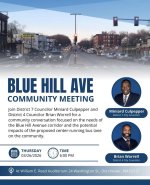
Councilor Culpepper ups the ante on trying to turf the Blue Hill Ave. bus lanes, same week as the federal funding comes through. This time he's backed away from the racism argument, and is just citing the same old worn tropes about loss of parking negatively affecting businesses and "more community input" (whatever that means after 20 years of seeking community input) being needed. Wants the money instead to be diverted into extending the free-fare program so the buses can be forever crappy but free...for a still-indeterminate period of time.
 
Last edited:
I know this has been discusssd earlier but this virtual meeting is tonight: https://www.mbta.com/events/2026-03...ford-street-transit-priority-corridor-project

def attend if you can - the fewer car-brained people show up the better!

Project website again for reference: https://www.mbta.com/projects/lower-broadway-alford-street-transit-priority-corridor
I'll be there tonight taking notes for anyone who isn't able to attend in person, but if you can please show up and don't let the NIMBYs be the loud minority!
 

Back
Top