ah, the classic "we cannot build bus lanes in the places where buses would benefit the most from bus lanes" argument.The stated reason was that traffic impacts were too significant for this area to take away travel lanes

You are using an out of date browser. It may not display this or other websites correctly.
You should upgrade or use an alternative browser.
You should upgrade or use an alternative browser.
MBTA Buses & Infrastructure
- Thread starter Arlington
- Start date
The city and state have a long track record of lacking any creativity and being very stuck in anachronistic transit patterns. They also have a pattern ofproposing and often also implementing transportation projects that simply grab low hanging fruit to throw on a bus lane or a bike lane or a road, but then have it terminate at the first choke point. It’s like the stupid idea of the urban ring to take over space on MCB— get a great bus lane that sits in traffic for two blocks by Boston Medical Center, then rushes everyone to Tremont and then sits in traffic trying to get to Ruggles. This is the same. It’s a fundamentally stupid idea without some kind of determination as to whether anything EVER will be done for a Warren to Nubian ROW. I think it’s pretty unlikely that will ever happen, so it begs the question, why are they still stuck on Nubian being the terminus? You would think from various recent plans that Jackson doesn’t even exist in anyone’s minds. I thought the same thing about the proposed Columbus bus lane, which doesn’t really seem to add much value, either, since isn’t the vast majority of ridership of those bus lines just going to be able to get off at Jackson as they are already? Why not just make Jackson a bigger hub and you can get people coming from further south onto rapid transit more quickly than sitting through multiple stoplights on the way to Ruggles.I think the biggest failure of the Blue Hill Design is the disconnect at Seaver Street (and someone please correct me if there is a future plan I am missing). Why on earth would the design go all the way to Warren Street and just terminate not at a hub of some kind? Why not turn left and connect into the Columbus Ave bus lane that is already built and terminates at Jackson Square? Especially considering the investment in White Stadium within Franklin Park, why not push to build a connected system? If you could take a dedicated bus lane to a single transfer point of Jackson Square, that could dramatically help with car commuters. Seems like the biggest miss of the entire project and probably more pandering to the people who want to keep their curbside parking along Seaver (my dramatic reaction only).

TheRatmeister
Senior Member
- Joined
- Sep 23, 2023
- Messages
- 1,644
- Reaction score
- 3,382
This doesn't seem to be a new development actually. The SL3X study shows the same thing:


Charlie_mta
Senior Member
- Joined
- Jul 15, 2006
- Messages
- 5,323
- Reaction score
- 8,192
The two are a bit different. The SL3X study shows no bus lanes from Bartlett St to Sweetser Circle, but your notes from from last night's meeting show bus lanes ending at Beacham Street, about 0.2 miles south of the Bartlett St/Broadway intersection. That's quite a difference.This doesn't seem to be a new development actually. The SL3X study shows the same thing:
View attachment 71453

cubbe8
Active Member
- Joined
- Mar 18, 2022
- Messages
- 438
- Reaction score
- 782
• Improving Boston Avenue in Medford (Routes 94, 80, possibly implicating the 350, 67, 96)
• Extend Route 426 to Jack Satter House
• Serve A Street in South Boston
• Retain service to Point Shirley, Winthrop
• Retain Route 44 service to Ruggles
• Changes to operating hours and days on Route 18, 43, 85, 504, 202
• Restore Route 465 to Danvers Square

The EGE
Senior Member
- Joined
- Jun 29, 2013
- Messages
- 1,931
- Reaction score
- 5,372
Very curious to see what this involves. I can't imagine bus lanes on a street that's 40 feet with with an existing bike lane. Maybe some queue jumps? The current plan only has the worse-than-every-30 route 80 on Boston Avenue. The 94 and 350 are scheduled to go away with BNRD. The 96 currently uses a few blocks of Boston Avenue, but under BNRD it's planned to shift to College. Under BNRD the 67 won't have any unique coverage east of Arlington Center (save for a few blocks of Alewife Brook Parkway with no likely stops), so I suppose you could redirect it to Tufts or Davis, but why?Improving Boston Avenue in Medford (Routes 94, 80, possibly implicating the 350, 67, 96)
Extend Route 426 to Jack Satter House
I like this one. Revere Beach Boulevard north of Revere Street has some big complexes including Jack Satter House, and it's far enough from North Shore Road (with no cross streets) to be a pain. Hopefully it's a little loop after serving Wonderland, not forcing all the 426 riders to go the extra distance before reaching Wonderland.
I like this one too. A Street is set to lose its current unidirectional route 11 service, but it's an area primed for (continued) redevelopment. The two current stops pull decent ridership despite one-way service and limited frequency. Extending the 42 from Broadway to Courthouse to get bidirectional service seems like an easy win.Serve A Street in South Boston
Eh, I guess. Very little ridership on the segment that's due to be cut, but it's probably not a schedule-killer to retain.Retain service to Point Shirley, Winthrop
Sure, if there's enough riders who want to get to Ruggles, that's fine.Retain Route 44 service to Ruggles
The current BNRD plan calls for:Changes to operating hours and days on Route 18, 43, 85, 504, 202
- 18: Weekday middays only. I could see this justifying peak service.
- 43: Weekday middays only. This absolutely should have peak service (and really should be an every-30 route)
- 85: Weekdays, 6 am to 7 pm. I can see the case for evening or weekend service (remember, this is replacing the CT2), but I think making it better than every 90 midday is more important.
- 202: Weekday peak only (201 will be daily). I'm still mad that the May 2022 plan to get rid of the loop route got nixed. (The 215 would have taken over Adams Street with more consistent service, while the new 20 would take over Neponset Avenue and the east half of the 26 (another frustrating loop).
- 504: Weekdays, 6 am to 7 pm (every 15 at peak and 90 otherwise). This badly needs weekend service and better midday service until we get a Newton Corner infill. Otherwise, anyone on the 500-series routes wanting to get to downtown at those times has to change to the 57.
It is absolutely criminal that a city of 28k people 16 miles from Boston has no transit service except to the mall.Restore Route 465 to Danvers Square

Delvin4519
Active Member
- Joined
- Oct 8, 2022
- Messages
- 941
- Reaction score
- 1,639
The 67 is more of a coverage route; and I’d suppose it’s because having the 350 rerouted to Davis is too big of a detour; so the might rather leave the 350 unchanged and instead send the 67 in lieu of the 350 to provide the GLX connection to Arlington, with maybe longer hours.Very curious to see what this involves. I can't imagine bus lanes on a street that's 40 feet with with an existing bike lane. Maybe some queue jumps? The current plan only has the worse-than-every-30 route 80 on Boston Avenue. The 94 and 350 are scheduled to go away with BNRD. The 96 currently uses a few blocks of Boston Avenue, but under BNRD it's planned to shift to College. Under BNRD the 67 won't have any unique coverage east of Arlington Center (save for a few blocks of Alewife Brook Parkway with no likely stops), so I suppose you could redirect it to Tufts or Davis, but why?
I like this one. Revere Beach Boulevard north of Revere Street has some big complexes including Jack Satter House, and it's far enough from North Shore Road (with no cross streets) to be a pain. Hopefully it's a little loop after serving Wonderland, not forcing all the 426 riders to go the extra distance before reaching Wonderland.
I like this one too. A Street is set to lose its current unidirectional route 11 service, but it's an area primed for (continued) redevelopment. The two current stops pull decent ridership despite one-way service and limited frequency. Extending the 42 from Broadway to Courthouse to get bidirectional service seems like an easy win.
Eh, I guess. Very little ridership on the segment that's due to be cut, but it's probably not a schedule-killer to retain.
Sure, if there's enough riders who want to get to Ruggles, that's fine.
The current BNRD plan calls for:
- 18: Weekday middays only. I could see this justifying peak service.
- 43: Weekday middays only. This absolutely should have peak service (and really should be an every-30 route)
- 85: Weekdays, 6 am to 7 pm. I can see the case for evening or weekend service (remember, this is replacing the CT2), but I think making it better than every 90 midday is more important.
- 202: Weekday peak only (201 will be daily). I'm still mad that the May 2022 plan to get rid of the loop route got nixed. (The 215 would have taken over Adams Street with more consistent service, while the new 20 would take over Neponset Avenue and the east half of the 26 (another frustrating loop).
- 504: Weekdays, 6 am to 7 pm (every 15 at peak and 90 otherwise). This badly needs weekend service and better midday service until we get a Newton Corner infill. Otherwise, anyone on the 500-series routes wanting to get to downtown at those times has to change to the 57.
It is absolutely criminal that a city of 28k people 16 miles from Boston has no transit service except to the mall.
For the Boston Avenue case; I wonder if the MBTA is probably looking to cancel the rerouting of the 96 bus away from the GLX and instead leave it on Boston Avenue as it is today rather than bypass the GLX completely.
The 43 bus isn’t high frequency or high ridership; I think they’re just looking to cancel the service cuts proposed in BNRD since what it provides today is mostly just a mirror version of the 68 bus.
Last edited:

themissinglink
Senior Member
- Joined
- Jan 13, 2018
- Messages
- 2,245
- Reaction score
- 6,465

Wu Administration Delays Columbus Ave. Transit Project; City Hall Planners Told to Cancel Meetings With MBTA - Streetsblog Massachusetts
A public records request reveals that Boston transportation planners were "directed to not participate in external meetings, including meetings with partner agencies, without express approval" from City Hall leadership.
 mass.streetsblog.org
Mayor Wu's administration is throwing up more roadblocks for MBTA transit improvements in Boston while her constituents struggle with rapidly-rising transportation costs and worsening congestion on the city's streets.
Through a public records request, StreetsblogMASS has obtained emails that reveal how senior officials in Mayor Wu's administration have delayed work on a long-planned MBTA project to create a dedicated bus transitway in Roxbury, potentially putting $34 million in federal transit funding at risk.
The emails concern the proposed "Columbus Avenue Phase II" bus lane project, which would extend an existing center-running busway built on Columbus Avenue in 2021.
[...]
At the beginning of March, StreetsblogMASS filed public records requests to the City of Boston and to the MBTA for email correspondence related to the project. The City of Boston did not fulfill that request, but the MBTA did.
The emails show that MBTA project managers were repeatedly asking City of Boston to review final design plans for the Columbus Avenue project over the winter – and City of Boston Chief of Streets Nick Gove repeatedly denied those requests.
Longfellow
Active Member
- Joined
- Dec 12, 2023
- Messages
- 458
- Reaction score
- 1,112
CIA hit her with the ray gun that turns you into Eric Adams apparently
cubbe8
Active Member
- Joined
- Mar 18, 2022
- Messages
- 438
- Reaction score
- 782
Wu Administration Delays Columbus Ave. Transit Project; City Hall Planners Told to Cancel Meetings With MBTA - Streetsblog Massachusetts
A public records request reveals that Boston transportation planners were "directed to not participate in external meetings, including meetings with partner agencies, without express approval" from City Hall leadership.
This is on the agenda for tomorrow’s Public Improvement Comission…

Public Improvement Commission Hearing
This Thursday's Public Improvement Commission hearing is scheduled for its regular time, 10 a.m. Project teams and Commission members will be participating in this hearing primarily from remote locations. Hearing participants will be digitally connected in real time courtesy of the City’s...
 www.boston.gov
lainpimicaja
Active Member
- Joined
- Jun 28, 2021
- Messages
- 175
- Reaction score
- 675
That could also be Ruggles Station Phase 2 work (been a lot of construction activity at Ruggles lately): https://www.mbta.com/projects/ruggles-station-improvementsView attachment 71619
This is on the agenda for tomorrow’s Public Improvement Comission…
Public Improvement Commission Hearing
This Thursday's Public Improvement Commission hearing is scheduled for its regular time, 10 a.m. Project teams and Commission members will be participating in this hearing primarily from remote locations. Hearing participants will be digitally connected in real time courtesy of the City’s...
Forsyth St and Northeastern seem to be the giveaway on that.
I can't imagine that the improvement here means changing the street design - Medford is changing but not as fast as putting bus lanes on such a local street. I think it must be about the lack of a replacement for the 94 and that the 96, as proposed doesn't hit the same neighborhoods. Plus the lack of a good connection to the Medford GLX station.Very curious to see what this involves. I can't imagine bus lanes on a street that's 40 feet with with an existing bike lane. Maybe some queue jumps? The current plan only has the worse-than-every-30 route 80 on Boston Avenue. The 94 and 350 are scheduled to go away with BNRD. The 96 currently uses a few blocks of Boston Avenue, but under BNRD it's planned to shift to College. Under BNRD the 67 won't have any unique coverage east of Arlington Center (save for a few blocks of Alewife Brook Parkway with no likely stops), so I suppose you could redirect it to Tufts or Davis, but why?

StreetsblogMASS
New member
- Joined
- May 26, 2023
- Messages
- 73
- Reaction score
- 450
That could also be Ruggles Station Phase 2 work (been a lot of construction activity at Ruggles lately): https://www.mbta.com/projects/ruggles-station-improvements
Forsyth St and Northeastern seem to be the giveaway on that.
Can confirm – this agenda item is for the Ruggles station project. It was also on the PIC agenda two weeks ago for a first reading, and had also caught my eye back then.
RandomWalk
Senior Member
- Joined
- Feb 2, 2014
- Messages
- 4,063
- Reaction score
- 7,886
The T is going to chicken out on really reimagining the buses around the GLX, which is criminal. There is near zero reason to leave the 80 heading to Lechmere. Similarly, the 96 and 94 overlapping so much inside of the Medford/Tufts stop.The 67 is more of a coverage route; and I’d suppose it’s because having the 350 rerouted to Davis is too big of a detour; so the might rather leave the 350 unchanged and instead send the 67 in lieu of the 350 to provide the GLX connection to Arlington, with maybe longer hours.
For the Boston Avenue case; I wonder if the MBTA is probably looking to cancel the rerouting of the 96 bus away from the GLX and instead leave it on Boston Avenue as it is today rather than bypass the GLX completely.
The 43 bus isn’t high frequency or high ridership; I think they’re just looking to cancel the service cuts proposed in BNRD since what it provides today is mostly just a mirror version of the 68 bus.
The EGE
Senior Member
- Joined
- Jun 29, 2013
- Messages
- 1,931
- Reaction score
- 5,372
BNRD currently calls for the 80 to terminate at Davis, with the portion east of Powder House Square discontinued. That makes sense to me - Davis is a bigger destination, has more frequent rapid transit, and has a dedicated busway. It also calls for the 94 to be discontinued, while the 96 will be rerouted over College-George-Winthrop. Union Square/East Somerville will also be a terminal for the extended 47 and rerouted 96.
RandomWalk
Senior Member
- Joined
- Feb 2, 2014
- Messages
- 4,063
- Reaction score
- 7,886
All of those are sensible. Maybe there needs to be some replacement West Medford service. Clearly the folks in Medford can’t suffer the pain of bus stops moving.
F-Line to Dudley
Superstar
- Joined
- Nov 2, 2010
- Messages
- 10,157
- Reaction score
- 13,105
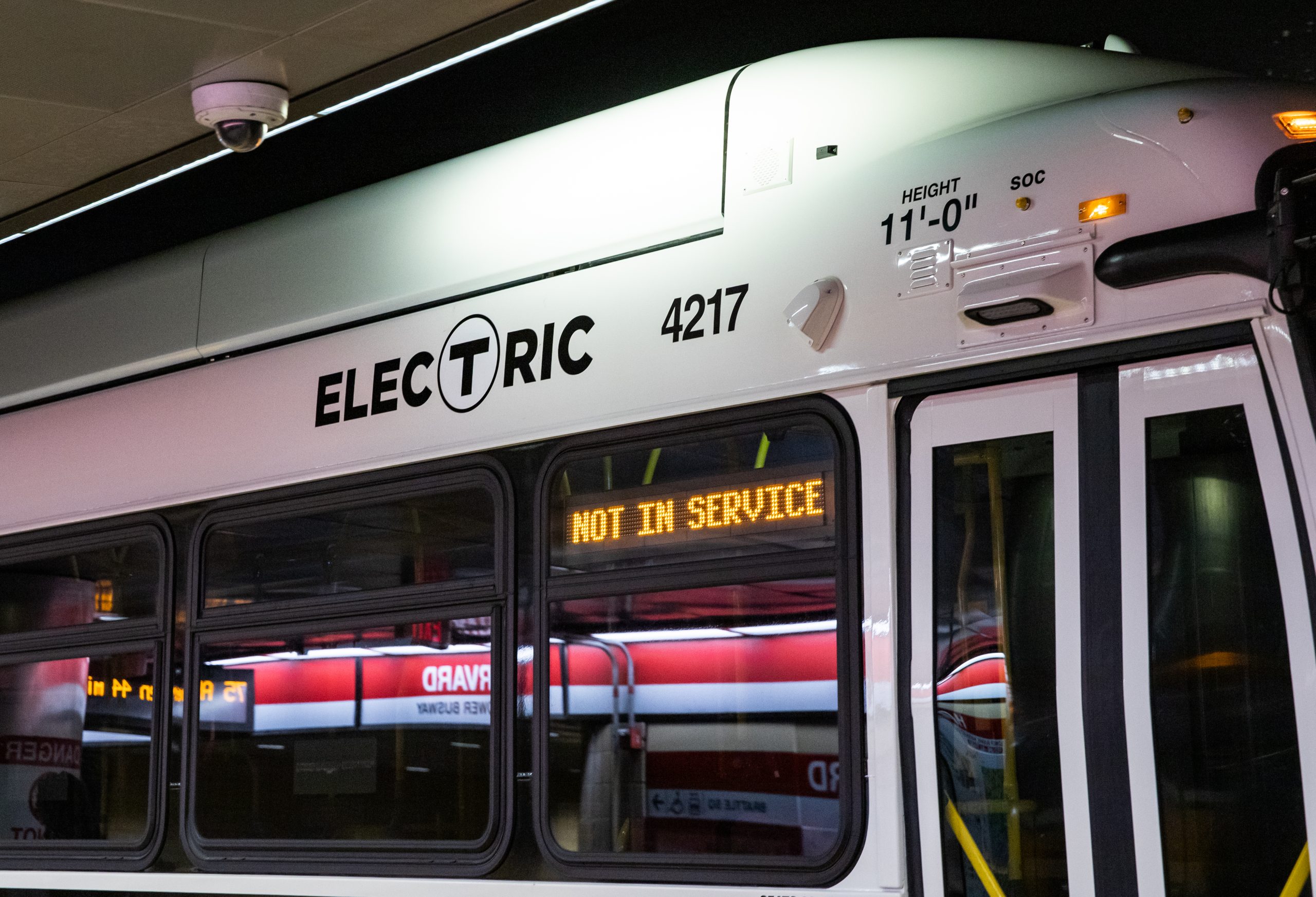
Where the rubber meets the road: MBTA questions if electric bus mandate is worth the tradeoffs
State law requires the MBTA to purchase only zero-emissions buses starting in 2031 and to have the entire fleet transitioned by 2041. Now, to the ire of a key lawmaker, agency leaders want to kickstart a public discussion about whether that hard-to-accomplish change is still in the state’s best...
 commonwealthbeacon.org
The white flag is starting to wave pretty vigorously from within on the state's bus electrification mandate, with general consensus that the 2041 deadline for full deployment and 2031 cutoff for buying fossil-fuel buses won't be even close to met. And they're saber-rattling already about service cuts as a result. Dovetails with the very downbeat overall tone of the T's board presentation last week on agency-wide decarbonization, which indicated that the early results of BEB testing have been problematic. For reference, the T's 5-bus fleet of 2019 New Flyer XE60's assigned to the Silver Line haven't run any trips at all since mid-December, missing virtually the entire 2025-26 winter season (I don't think they have diesel heaters like the new North Cambridge and Quincy XE40's).
SuffolkHeights11
Active Member
- Joined
- Mar 3, 2021
- Messages
- 125
- Reaction score
- 485
The Legislature's position on electrifying buses contains the same logical fallacy as Boston's position on decarbonizing its buildings, which is transportation causes emissions, therefore lowering transportation emissions lowers emissions. For buildings in Boston, the argument is buildings cause the most emissions, so lowering building emissions lowers emissions.
The article does a great job of calling this fallacy out here:
Transportation accounts for about 38 percent of greenhouse gas emissions in Massachusetts, the largest share of all sectors, according to state data. The entire MBTA, including diesel fuel burned to power commuter rail trains and its use of electricity that comes from a grid still reliant on fossil fuels, is responsible for about 1 percent of the state’s transportation-related emissions. That makes the T a tiny dot, and non-electric buses even more microscopic, in the bigger emissions picture.
With that in mind, advocates like Aloisi and Kane argue that Massachusetts can better achieve its overall decarbonization goals in the short term, counterintuitively, by spending money on more diesel buses. More bus service could incentivize more people to use public transit instead of driving alone, the thinking goes, and dozens or hundreds more diesel buses would spew less greenhouse gases than thousands or tens of thousands of gasoline-powered cars taken off the roads.
If buses run less frequently, or not at all, those trips switch to a less efficient, higher emission mode, i.e. driving. Likewise, a building that is not built in Boston will be built either (a) in a Massachusetts suburb that requires a car to get, or (b) another state that has lower emission standards or none at all. Therefore, by forcing the most energy efficient sectors to be even more energy efficient, you are in effect causing higher emissions.
The administration in Boston is hopelessly stubborn and ideological, but hopefully the MA Legislature can realize the problem with this bus mandate and change course.
F-Line to Dudley
Superstar
- Joined
- Nov 2, 2010
- Messages
- 10,157
- Reaction score
- 13,105
The Legislature is not exactly detail-oriented, so I have little hope that change is going to come from the top-down. The slides in the T's decarbonization presentation outline some of the problems with them making all this an unfunded mandate. Replacing the old bus garages is necessary even with the transition to hybrid buses because so many critical vehicle systems are being moved from the undersides of buses to the roofs to create room for things like hybrid batteries. Decrepit facilities like the current Quincy garage can't service buses with anything on the roofs and so are stuck with the old pure diesels, while the other garages that can kinda-sorta service the hybrids do so more slowly than they should be able to because of the less-than-easy roof access, meaning daily fleet availability isn't as good as it could be. The deferred facility maintenance has to be addressed in one way or the other to even make partial progress, but the T has been starving for funds for that despite eating its peas properly on the procurement front buying almost nothing but hybrids for 15 years now. You can throw all that into the same rancid vat of the Legislature's chronic underfunding of the T. If they can't keep the back end of the system up to modern repair, service levels naturally decline and car dependency increases. Doesn't take a genius to figure that out, but we're dealing with very much not-geniuses in the seat of power.The Legislature's position on electrifying buses contains the same logical fallacy as Boston's position on decarbonizing its buildings, which is transportation causes emissions, therefore lowering transportation emissions lowers emissions. For buildings in Boston, the argument is buildings cause the most emissions, so lowering building emissions lowers emissions.
The article does a great job of calling this fallacy out here:
Transportation accounts for about 38 percent of greenhouse gas emissions in Massachusetts, the largest share of all sectors, according to state data. The entire MBTA, including diesel fuel burned to power commuter rail trains and its use of electricity that comes from a grid still reliant on fossil fuels, is responsible for about 1 percent of the state’s transportation-related emissions. That makes the T a tiny dot, and non-electric buses even more microscopic, in the bigger emissions picture.
With that in mind, advocates like Aloisi and Kane argue that Massachusetts can better achieve its overall decarbonization goals in the short term, counterintuitively, by spending money on more diesel buses. More bus service could incentivize more people to use public transit instead of driving alone, the thinking goes, and dozens or hundreds more diesel buses would spew less greenhouse gases than thousands or tens of thousands of gasoline-powered cars taken off the roads.
If buses run less frequently, or not at all, those trips switch to a less efficient, higher emission mode, i.e. driving. Likewise, a building that is not built in Boston will be built either (a) in a Massachusetts suburb that requires a car to get, or (b) another state that has lower emission standards or none at all. Therefore, by forcing the most energy efficient sectors to be even more energy efficient, you are in effect causing higher emissions.
The administration in Boston is hopelessly stubborn and ideological, but hopefully the MA Legislature can realize the problem with this bus mandate and change course.
The T then compounds these problems with its hopium belief in magic-beans new technology to get out of expending effort and brainpower solving actual problems with the mandates they (fairly are unfairly) are expected to implement. They scrap the whole of the century-proven trackless trolley system, then find out that BEB's even on the small scale of that former system can't handle the charging range in winter and are way more taxing to maintain. Whoops...service cuts ahoy! Nobody could've foreseen!...except for every freaking other cold-weather system in the world that ended up undershooting its projected charging ranges in practice. Seriously...look at any case study about how badly Moscow belly-flopped on ripping down its TT lines for BEB's, or how badly Shenzhen, China dug itself into a budgeting doom loop underestimating its (much warmer-weather!) BEB spare ratios to the detriment of service levels when it jumped without a safety net at 100% diesel replacement without proper consideration of the risks. These risks were absolutely known and very well-documented! As were the procurement market considerations of few reputable BEB suppliers, shakiness of first-generation technology reliability, overreliance on other rare-earth minerals rich countries and fragile geopolitics therein for supplying the batteries, and inherent susceptibility to (now-realized) price shocks. T leaders could've been expending more advocacy effort warning and educating the dunces in the Legislature about the risks of early adoption of immature technology so there could be better guardrails, but they didn't. They sprouted nothing but hopium about battery magic for 4 years and now...oops! Need way more spares, but ripped down the TT's that required very few spares. Need diesel heaters, but did no legwork on the arcane regulatory approvals and are now behind-schedule. Need special permitting for charging rigs, but did no research so now yard costs are exploding to their complete surprise. All of these things were anticipateable and were duly warned by advocates who saw the wreck coming, but they're just going deer-in-headlights because they thought they were getting miracle tech without altering course...not a whole new way of doing things that requires whole new kinds of problem-solving. Like a slow-motion train wreck, it's going to ream them on Commuter Rail, too. Absolutely no adherence to best-practices whatsoever, and total befuddlement that doing things their own way doesn't end up working out. On repeat. This management attitude isn't sustainable. And Eng, to my eternal dismay, is just pouring cement over it.
I believe it's absolutely the right thing to delay or heavily modify this mandate, because everyone involved in it fucked up to some LARGE degree and if service cuts are now a top risk they're doing absolutely more harm than good. But there needs to be self-reflection and learned behavior coming out of it. The mandate needs to be replaced with a more realistic mandate to the same general goal and targeted reforms to the way we do things and WHO gets to do those things...not just scrapped because it's all (*hand-waves*) too hard. "Too hard" is just a cop-out to never learn anything and never evolve. There's tons of world best-practice to learn from to do this better, if only they'd be willing to learn from it. I fear that everyone involved is so far up their own buttholes that they're just going to run in terror from anything that forces them to learn new things, and we're either going to continue plowing ahead full-steam on the current untenable course--and fail badly with worse service--or just retreat totally and never pursue a good and necessary thing. Our leaders are just not up to figuring a way through this challenge...not Healey, not Eng, not the godforsaken Legislature, and not the department higher-ups at the T.
Last edited: