It's true but I wouldn't say it's a "good chance". There are thousands of people working at MassDOT, the MBTA, MPOs/RPAs, municipalities, consultants, etc. Please actually attend meetings, contact agencies/electeds and do the harder but much more impactful IRL work.A great reminder that some of the actual planners and engineers on these projects (both public and private side) are either members of this forum or at least read it. If you have a good idea or solution, there's a good chance that by just posting it, you've essentially proposed it to the project team for consideration!

You are using an out of date browser. It may not display this or other websites correctly.
You should upgrade or use an alternative browser.
You should upgrade or use an alternative browser.
MBTA Buses & Infrastructure
- Thread starter Arlington
- Start date
I'm not saying it automatically becomes "Alternative B", but during a design charette or internal options matrix, it might get included. Definitely still need to show up to community meetings to show support too!It's true but I wouldn't say it's a "good chance". There are thousands of people working at MassDOT, the MBTA, MPOs/RPAs, municipalities, consultants, etc. Please actually attend meetings, contact agencies/electeds and do the harder but much more impactful IRL work.

The EGE
Senior Member
- Joined
- Jun 29, 2013
- Messages
- 1,920
- Reaction score
- 5,336
An interesting oddity from the service changes effective today: the cutback of route 85 to Bow Street is now permanent. The cut occurred in July 2023 due to street construction; it was supposed to be short-lived, but was never reversed for reasons that aren't clear. (It was also planned as part of the BNRD, under which the 85 will largely be rerouted to replaced the CT2. However, the cutback was still indicated as temporary, with timetables showing the full route, until now. Ironically, the construction included bus boarding islands on Summer Street, which will now go unused.
The Spring Hill section had a long history. It originated as a horsecar line built to Putnam Street in 1883 and Central Street in 1885. It was electrified on November 21, 1893 and converted to bus on September 18, 1926. There were some modifications over the years - the Avon Street loop may have been added around 1930, part of Webster was closed in 1971, and the northern end was extended to Davis from 1975 to 1981 - but the basic bus routing persisted for almost a century.
The Spring Hill section had a long history. It originated as a horsecar line built to Putnam Street in 1883 and Central Street in 1885. It was electrified on November 21, 1893 and converted to bus on September 18, 1926. There were some modifications over the years - the Avon Street loop may have been added around 1930, part of Webster was closed in 1971, and the northern end was extended to Davis from 1975 to 1981 - but the basic bus routing persisted for almost a century.
I hope that the City of Somerville charges the T for these boarding islands. It would only be fair.Ironically, the construction included bus boarding islands on Summer Street, which will now go unused.
But the t would be upset that they wouldn't have inaccessible stops if the 85 stayed longer than expected or if it was kept in because of the neighborhood resistance.The cut was already planned by May 2022. It's strange that Somerville still constructed the islands well after that.
F-Line to Dudley
Superstar
- Joined
- Nov 2, 2010
- Messages
- 10,112
- Reaction score
- 12,905
T executes a +40 unit option order on their New Flyer BEB contract to flesh out new Quincy garage to 88 total buses. They will probably need to exercise another option later on to pad out the numbers a little further, because Quincy today rosters 89 buses and BEB's need about a 25% spare ratio for charging downtime.
The EGE
Senior Member
- Joined
- Jun 29, 2013
- Messages
- 1,920
- Reaction score
- 5,336
The garage is supposedly big enough for 120 buses:
Perhaps the 88 is just sufficient for existing service?
Perhaps the 88 is just sufficient for existing service?
F-Line to Dudley
Superstar
- Joined
- Nov 2, 2010
- Messages
- 10,112
- Reaction score
- 12,905
Quincy would need about 100 to maintain existing service with BEB's. The rest of the space is for service expansion. The T's still got 340 un-exercised options on the 40-footer BEB contract, most of which are earmarked to populate the new Arborway and Medford garages but which at least 100 buses appear to be slush options to spread around the system. So we'll probably see another small tack-on in the coming months to buff out Quincy further.The garage is supposedly big enough for 120 buses:
Perhaps the 88 is just sufficient for existing service?

Years ago, Boston put bus lanes in the middle of this busy street. Has it worked? - The Boston Globe
As Boston and other localities prepare to carve out more bus-exclusive street space, what lessons does Columbus offer?
 www.bostonglobe.com

Scott
Senior Member
- Joined
- May 25, 2006
- Messages
- 1,418
- Reaction score
- 1,050
Betteridge's law of headlines is an adage that states: "Any headline that ends in a question mark can be answered by the word no." It is based on the assumption that if the publishers were confident that the answer was yes, they would have presented it as an assertion; by presenting it as a question, they are not accountable for whether it is correct or not.
Edit: This is a criticism of the reporting style not bike lanes
Edit: This is a criticism of the reporting style not bike lanes
Last edited:
They present it as a pretty mixed bag. Drive times are slightly up, bus times are much more significantly down, crashes are down, but bus-involved crashes are up. They point to (and I agree) the lack of a barrier between the bus lanes and the travel lanes, allowing the more entitled among us to simply slip into the bus lane as an express route (until they crash into a bus). Though the lack of a barrier between the two was insisted upon by the fire dept, so idk what the remedy is without them on-side.

Koopzilla24
Active Member
- Joined
- Dec 20, 2022
- Messages
- 465
- Reaction score
- 1,393
It's the person who drives from Dorchester to Roxbury and is complaining about traffic that will never be convinced of anything. Most of the bus routes that travel through Dorchester go to Roxbury. They say they're now late to school dropoff (idk how not a minute of delay would cause that) but if they're driving along Columbus to Roxbury I'd assume they must attend one of the schools on Malcolm X. I get some parents want to drive their kid to school but if this is seriously such a strain on your life to do the drive when there are so many alternatives to get to your destination then I don't know what could help change the mind of such a person. It's pretty clear from the outside that their issue wasn't that the bus lanes made it take longer, but rather the traffic came back in the years following 2021 as the pandemic waned. I'm not sure you can convince people dead-set on driving that driving even if they don't need to is the problem here and they gotta learn to live with that reality.
Seems like one of the better, more well-rounded Globe articles tbh. I've read too many articles that focus almost entirely on the opinions of a few vocal neighbors. This article included the criticism, as well as positive reaction, advocate/expert perspectives, and most importantly data.
This was a big first change that people are still getting used to, but overall, I read the article quite positively. Bus times are improving and private vehicles are barely affected. There are a few more incidents that come from the adjustments to the road. I think once the treatment is extended up to Ruggles and down BHA (along with bus-mounted enforcement), the larger understanding, vision, and results will become much clearer to all road users (except for those who despise the idea of taking the bus/those who do). Right now, it's still a pretty short section, but the larger vision is a massive and very important corridor through the city.
This was a big first change that people are still getting used to, but overall, I read the article quite positively. Bus times are improving and private vehicles are barely affected. There are a few more incidents that come from the adjustments to the road. I think once the treatment is extended up to Ruggles and down BHA (along with bus-mounted enforcement), the larger understanding, vision, and results will become much clearer to all road users (except for those who despise the idea of taking the bus/those who do). Right now, it's still a pretty short section, but the larger vision is a massive and very important corridor through the city.
Last edited:

TheRatmeister
Senior Member
- Joined
- Sep 23, 2023
- Messages
- 1,632
- Reaction score
- 3,342
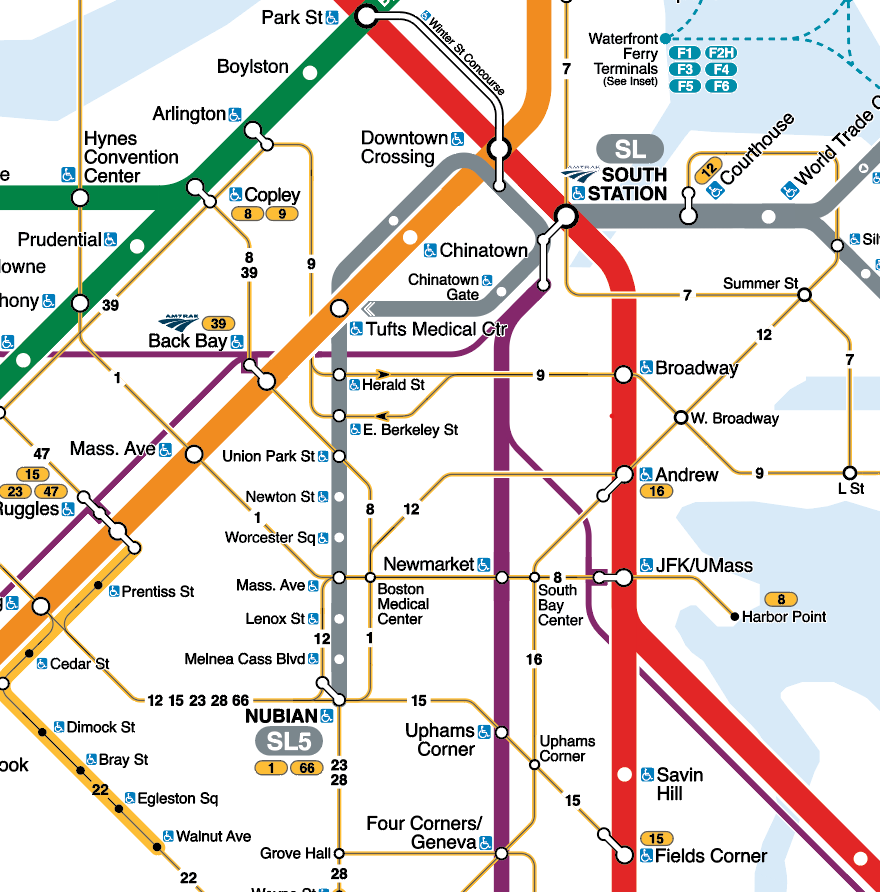
I've seen some recent plans for street designs downtown that have the BNRD Silver Line service as this, not the 'dog-leg' that was given. Here's the relevant section of my updated map.
Last edited:

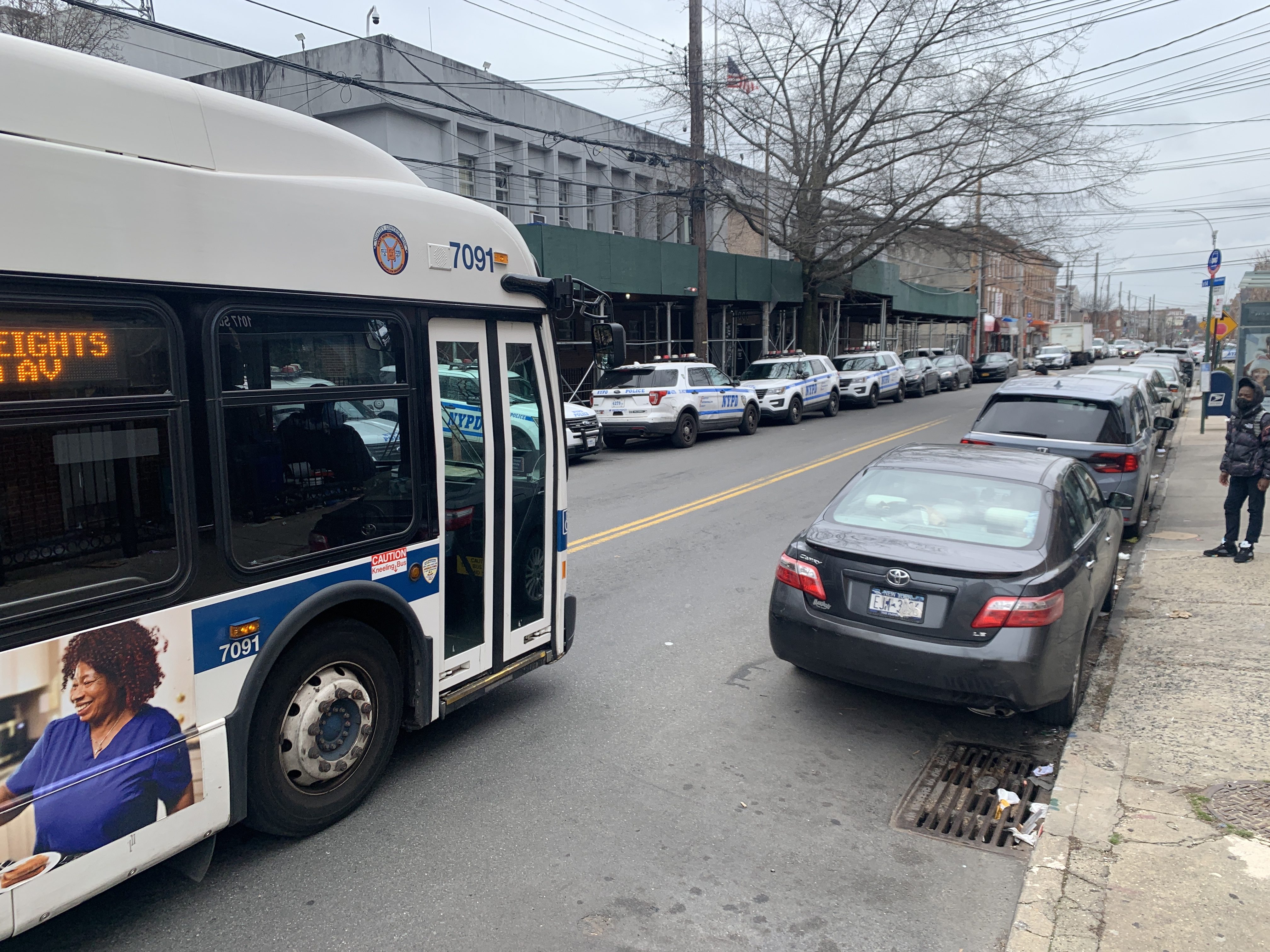
Go ACE! Bus Stops Are Clearer Than Ever Thanks To MTA's Bus-Mounted Camera Enforcement - Streetsblog New York City
The MTA's automated cameras are clearing up bus stops across the city.
 nyc.streetsblog.org
The number of drivers caught blocking bus stops along the 50 bus routes with Automated Camera Enforcement, which insiders call "ACE," has dropped 40 percent after the MTA turned on the cameras [in June 2024], with another four routes coming online last Friday.
I am so excited for this on the MBTA system

alewife
New member
- Joined
- Dec 19, 2023
- Messages
- 65
- Reaction score
- 230
Per Reddit, the T has quietly put at least one of the new battery-electric buses into revenue service. The one in the post is one of the 4300-series buses ultimately destined for the new Quincy Garage, not one of the 4200-series with left-side doors for the Harvard tunnel. I imagine there will be much more fanfare when the renovated North Cambridge facility opens and the new buses take over base service on the 71 and 73.
While I still think shutting down the trolleybus network and ripping out much of the infrastructure was a huge mistake, I'm glad to see the T making good on its promise to replace them with electric vehicles (albeit with diesel heaters for very cold weather), even if it's two years late. The left-hand door buses will also significantly speed up outbound trips on the 71/73 since they'll be able to go back to boarding in the lower busway and riders will no longer have to loop back through Harvard Square on the surface. (It would also be nice to get more buses with left-side doors for the 66 and 86 so those routes could also board in the lower busway.)
While I still think shutting down the trolleybus network and ripping out much of the infrastructure was a huge mistake, I'm glad to see the T making good on its promise to replace them with electric vehicles (albeit with diesel heaters for very cold weather), even if it's two years late. The left-hand door buses will also significantly speed up outbound trips on the 71/73 since they'll be able to go back to boarding in the lower busway and riders will no longer have to loop back through Harvard Square on the surface. (It would also be nice to get more buses with left-side doors for the 66 and 86 so those routes could also board in the lower busway.)
TheRatmeister
Senior Member
- Joined
- Sep 23, 2023
- Messages
- 1,632
- Reaction score
- 3,342
The diesel heaters make me even more skeptical about whether these are actually better or if they are just better at taking more money from different buckets while taking less from individual ones. The BEBs are ~17% heavier than the existing diesel/hybrid or CNG buses, which equates to 87% more road wear thanks to that sneaky 4th power. Between the higher upkeep costs compared to trolleybuses, the need for diesel heaters, and of course that sneaky 4th power, I'm not convinced we're actually saving any money by taking out those overhead lines.
Unfortunately without extensive insider knowledge and/or a lot of time, I'm not sure that's an answerable question.
Unfortunately without extensive insider knowledge and/or a lot of time, I'm not sure that's an answerable question.
F-Line to Dudley
Superstar
- Joined
- Nov 2, 2010
- Messages
- 10,112
- Reaction score
- 12,905
It's a soft launch with only a couple of buses participating, because these are being run out of Charlestown garage which only has a couple electric charging bays installed for the testing of the fleet. They're saving the 4200's for the full service launch which will come with the service change back to the lower busway, since until then there's no use for the left-hand doors. There's been 5 4200's and 5 4300's testing at Charlestown, Cabot, and Southampton for a few months now per NETransit, and an unspecified number of additional deliveries have also taken place. They need to get reps in cold weather to test the charging cycles in weather extremes (which the temps in the upcoming forecast will certainly challenge). Hopefully the newest-generation XE40's fare better than the 5 Silver Line XE60 BEB's from 2019 which haven't run at all in a month-and-a-half in a not-particularly-good omen for the tech.Per Reddit, the T has quietly put at least one of the new battery-electric buses into revenue service. The one in the post is one of the 4300-series buses ultimately destined for the new Quincy Garage, not one of the 4200-series with left-side doors for the Harvard tunnel. I imagine there will be much more fanfare when the renovated North Cambridge facility opens and the new buses take over base service on the 71 and 73.
While I still think shutting down the trolleybus network and ripping out much of the infrastructure was a huge mistake, I'm glad to see the T making good on its promise to replace them with electric vehicles (albeit with diesel heaters for very cold weather), even if it's two years late. The left-hand door buses will also significantly speed up outbound trips on the 71/73 since they'll be able to go back to boarding in the lower busway and riders will no longer have to loop back through Harvard Square on the surface. (It would also be nice to get more buses with left-side doors for the 66 and 86 so those routes could also board in the lower busway.)